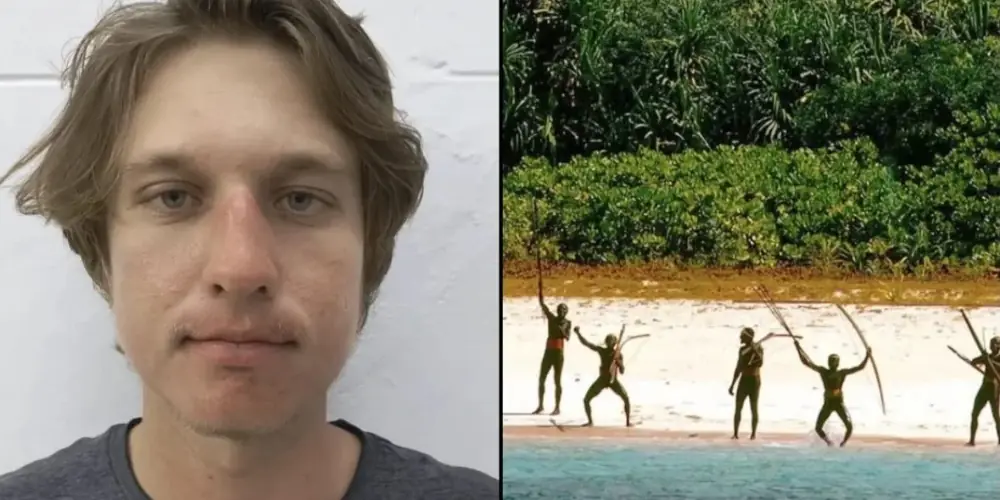
A camera, a boat, and a desire for exclusive footage can create a serious problem when the subject is a community that has chosen to remain apart from the outside world. That tension is growing as influencers and adventure filmmakers look for rare footage of Indigenous peoples living in voluntary isolation.
What some creators describe as exploration or documentary work, Indigenous advocates and human rights groups see as a threat to health, privacy, and territorial rights.
The debate became especially visible after American filmmaker Mykhailo Polyakov traveled toward North Sentinel Island in India in 2025. He wanted to record the Sentinelese, one of the world’s most isolated Indigenous peoples. His trip ended with an arrest, a 25-day prison sentence, and a fine. Yet the incident did not stop the wider debate.
Across parts of South America and Asia, other creators continue to produce videos about isolated or remote Indigenous groups. Some seek direct encounters. Others film nearby communities, use dramatic descriptions, or build online stories around the possibility of finding people who have avoided outside contact.
For advocates, the issue is not simply whether a creator breaks a law. It is also about what happens when social media turns Indigenous lives into highly clickable content.
The North Sentinel Island Attempt
In March 2025, Mykhailo Polyakov, then 24, traveled toward North Sentinel Island in the Bay of Bengal. The Arizona native had studied finance, but he wanted to make documentaries and capture footage that few people had ever recorded.
He left a beach around midnight in an inflatable dinghy. He carried a camera, a coconut, and a can of Diet Coke. After hours at sea, North Sentinel Island appeared in the distance.
Polyakov slowed his boat and eventually shut off the engine. He activated his GoPro and filmed himself approaching the island. His stated goal was to introduce the Sentinelese to modernity and record them in high-resolution footage.
Indian law prohibits outsiders from entering the island. Authorities also restrict travel within 5 kilometers, or about 3 miles, of the shore. The rules exist partly to protect the Sentinelese from outside diseases and to prevent dangerous encounters.
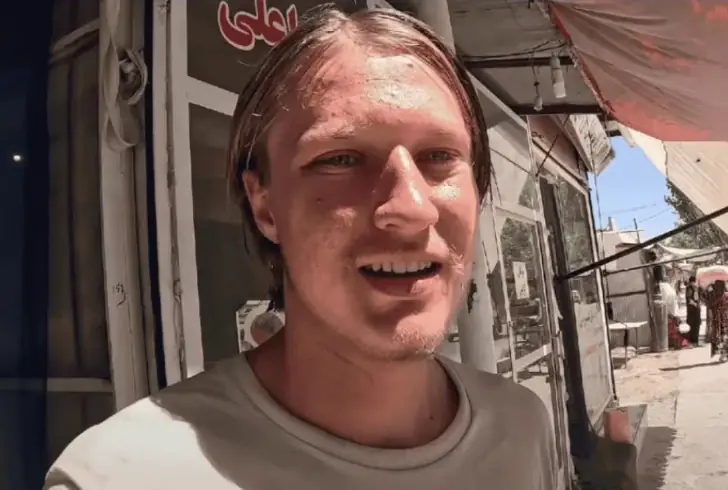
Polyakov knew the restrictions. Still, he made three attempts to reach the island before succeeding in getting close enough to land.
The Sentinelese are believed to number around 100 people, although no reliable population count exists. They live as hunter-gatherers and have resisted outside contact for generations. Little is known about their language, social structure, or daily life because they have repeatedly made clear that they do not want outsiders entering their territory.
That resistance has sometimes turned deadly.
In 2006, two Indian fishermen died after their boat drifted onto the island. In 2018, American missionary John Allen Chau was killed after attempting to reach the Sentinelese. Chau was 26 and had made repeated efforts to land on the island.
Those incidents did not stop Polyakov.
A Search for Rare Footage
Polyakov later said the chance to film the Sentinelese was a powerful attraction. Existing footage of the community is limited and often comes from older recordings made from a distance.
He wanted sharper images. He also wanted to create something that had not been done before.
Polyakov carried a mirror and whistle because he believed they might attract the islanders. He also brought a coconut and Diet Coke. He described the soft drink as a “symbol of modernity” and the coconut as a gift because the Sentinelese are known to collect coconuts.
His explanation drew criticism because the entire idea of approaching the island violated the community’s wish for isolation.
Polyakov later said he did not intend to force direct contact. His stated goal was to film from a safe distance. Still, he wanted the islanders to appear on camera.
During his successful attempt in March 2025, he reached the beach and remained there for roughly five to 10 minutes. He blew his whistle but received no response.
Before leaving, he threw the Diet Coke can toward the shore.
The result disappointed him. There was no dramatic meeting and no interaction with the Sentinelese. The footage showed his attempt rather than the encounter he had hoped to capture.
Polyakov later said he was more concerned about Indian authorities than the people on the island.
That concern proved justified.
Arrest and Legal Consequences
Polyakov returned to his hotel after leaving the island. However, he had failed to remove the memory card from his camera. The footage contained evidence of his trip, including recordings in which he identified his location.
Authorities had already received information about a dinghy in the area. Polyakov was arrested and charged under two laws.
He pleaded guilty. The court sentenced him to 25 days in prison and imposed a fine of roughly £120.
His footage from North Sentinel was later published on YouTube in April 2026. The response was largely negative. One highly ranked comment accused him of having “main character syndrome.”
Polyakov rejected much of the criticism. He argued that media reports had presented the incident unfairly and continued speaking publicly about the trip.
He also challenged the work of Survival International, a group that campaigns for the rights of Indigenous peoples living in voluntary isolation. Polyakov described the organization as an activist group with what he considered a misguided approach.
He argued that the Sentinelese already know about the outside world, pointing to plastic waste that reaches their shore. He also questioned whether communities such as the Sentinelese should still be described as “uncontacted.”
His position is that his trip did not cause globalization and that someone else would eventually attempt something similar.
Survival International strongly disagrees.
Why Voluntary Isolation Matters
Survival International estimates that about 196 Indigenous communities live in voluntary isolation around the world. Many live in the Amazon rainforest and the Gran Chaco region of Paraguay and Bolivia. Others live in Indonesia, West Papua, and the Andaman and Nicobar Islands.
The groups differ greatly in culture, language, environment, and history. What connects them is their decision to limit or reject contact with wider society.
The term “uncontacted peoples” can sometimes create confusion. These communities are not necessarily unaware of the modern world. Some have seen outsiders or encountered evidence of outside activity.
The more important point is consent.
Sophie Grig, head of advocacy and research at Survival International, argues that communities living in voluntary isolation have made an active choice to avoid outsiders. She has worked with Survival for about 30 years and has focused heavily on the Asia-Pacific region.
According to Grig, the organization monitors roughly a dozen social media accounts on YouTube, TikTok, and Instagram that discuss uncontacted peoples.
Many of the accounts belong to white men who create adventure content involving Indigenous communities. Their videos can also feature weapons, snakes, and so-called “plant medicine,” including ayahuasca.
Grig describes some of the content as driven by a macho desire to prove bravery.
She says the problem goes beyond a single creator. Survival estimates that the influencers it monitors collectively reach more than 40 million followers.
A creator does not have to make direct contact to influence public behavior. A video can still spread myths, encourage risky travel, or make an isolated community appear like an open challenge waiting to be conquered.
The Health Risk
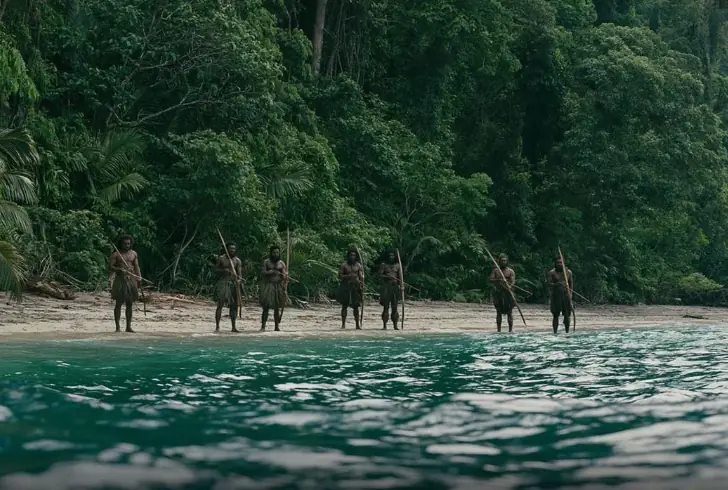
The most serious concern is not always violence. Disease can pose an even greater threat.
People who have lived apart from wider populations may have little or no immunity to common infectious diseases. Measles and other illnesses can spread quickly through communities that have limited previous exposure.
Beto Marubo, an Indigenous leader from Brazil’s Javari Valley, has warned that contact can have catastrophic consequences. He has said that contact with isolated peoples can lead to their extinction within days.
Brazil experienced the consequences of forced contact in earlier decades. In 1987, the government ended its policy of forced contact missions involving isolated Amazonian groups after repeated epidemics caused severe harm.
The history explains why modern no-contact policies exist.
Vaccination can reduce risks for outsiders, but advocates say it does not remove the ethical or medical problem. A visitor may carry other infections or expose a community to illnesses for which no practical protection exists.
The danger also works in both directions. An isolated community may respond aggressively to an unfamiliar person because it sees the encounter as a threat.
The Sentinelese have demonstrated that repeatedly.
A New Form of Colonial Pressure
Sophie Grig describes the influencer trend as part of a much older pattern.
Colonial expansion once focused on land, gold, rubber, timber, and religious conversion. Today, she argues, attention can shift toward online visibility.
Her description is blunt: “People have been after land, gold, rubber, timber, souls – and now it’s clicks.”
That comparison has become central to the debate.
Social platforms reward unusual footage, emotional reactions, danger, and exclusivity. A video titled around an ordinary cultural exchange may attract limited attention. A video promising a meeting with an isolated tribe can generate much stronger curiosity.
That incentive can blur the line between documentation and exploitation.
Polyakov operates on YouTube under the name @Neo-Orientalist and uses a Tintin-style avatar. He rejects the label of content creator and says social media is simply a tool for larger documentary ambitions.
When interviewed in May, he said he was working somewhere in southeast Asia but declined to reveal his exact location. He joked that people who wanted to know where he was going should subscribe.
His North Sentinel footage has not produced the enormous audience that might have been expected. At the time described in the original reporting, his YouTube channel had only slightly more than 10,000 subscribers.
The arrest, however, received considerably more attention than his videos.
The Gran Chaco Controversy
North Sentinel is not the only area attracting attention from online creators.
In Paraguay’s Gran Chaco region, filmmaker Nathan Seastrand has built an online following around Indigenous communities and the region’s natural environment.
Seastrand, 30, was born in Utah and has lived in Paraguay since 2016. He has about 276,000 Instagram followers and uses the name @yankiguayo.
He describes himself as a filmmaker and has produced documentaries involving the Ayoréo people.
The Ayoréo include small nomadic groups believed to live in voluntary isolation. Estimates place the number of isolated Ayoréo at about 150 people. Their remaining territory has declined as deforestation continues.
Local advocates look for indirect evidence of their presence, including tracks from tapir-leather sandals. They have not been photographed in decades.
Paraguay adopted a protocol in 2018 requiring authorities to prevent unwanted contact. However, unwanted contact is not specifically prohibited by law in the same way it is in some other countries. Access to Indigenous lands can also depend on decisions made by individual community leaders.
Seastrand has faced allegations about his activities in the region.
An unnamed influencer who had worked with him on a documentary claimed that Seastrand was intensely focused on finding and filming isolated Ayoréo. The person said Seastrand made repeated trips into the region, installed trail cameras, and attempted to obtain a thermal-imaging drone.
The same person alleged that Seastrand gave money and alcohol to Ayoréo leaders to obtain access to their reserve. He also claimed that disputes developed with neighboring communities.
The influencer eventually ended the working relationship and accused Seastrand of exploiting marginalized Indigenous people for fame and money.
Seastrand denies the allegations.
He said his activities were legal and approved by community leaders. He called the alcohol allegation absurd and said that sharing beer with friends was normal in the communities where he had developed relationships.
He confirmed that he paid money during filmmaking activities but said payments were not unusual in documentary production.
Seastrand also disputed claims about camera traps. He said the traps were placed in a developed area to record jaguars, not isolated people.
He argued that the chance of an isolated tribe living in that particular zone was extremely low. He compared the possibility to finding evidence of the Loch Ness monster or Bigfoot.
He also defended his use of terms such as “wild Ayoréo territory,” saying the wording helped attract viewers.
Questions About Consent
Other accusations have also surfaced around Seastrand.
An Ayoréo lawyer accused him of using a photograph of his late grandfather without permission and refusing to remove it. Seastrand said he had received permission from the grandfather and later removed the photograph.
Paraguayan media also reported allegations that Seastrand offered money to people who could locate isolated Ayoréo.
In mid-August, Paraguay’s National Indigenous Institute, known as INDI, became involved. A court granted emergency measures that included the removal of Seastrand’s camera traps.
Seastrand continues to deny wrongdoing and continues to publish material from the Chaco.
His background has also become part of the discussion. Before becoming an online creator, Seastrand worked as a Mormon missionary. A 2023 profile in The New York Times reported that he had baptized more than 30 people before leaving the church and moving into content creation.
Daniel Aristizábal of GTI PIACI sees a connection between missionary work and influencer culture. GTI PIACI is an alliance of 21 organizations that work to protect Indigenous peoples living in voluntary isolation in the Amazon and Gran Chaco.
Both missionaries and some influencers, he argues, can become focused on reaching Indigenous people rather than respecting their decision to remain apart.
The Legacy of John Allen Chau
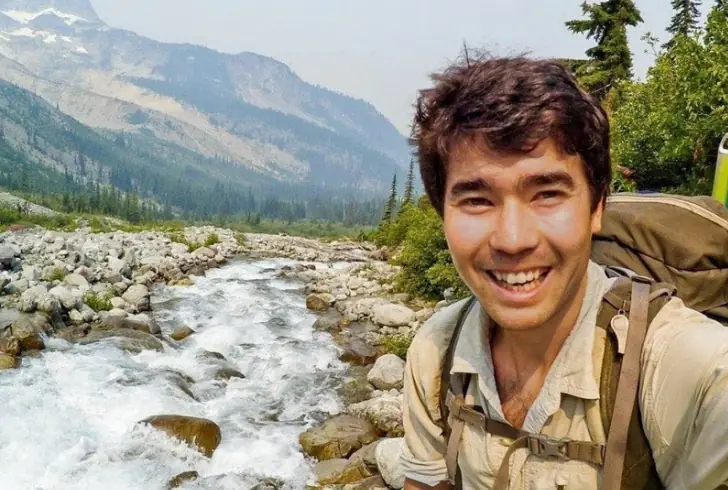
John Allen Chau remains one of the clearest examples of the danger surrounding attempted contact with the Sentinelese.
Chau was a Christian missionary who traveled to North Sentinel Island in 2018. He documented parts of his journey on Instagram and reportedly had commercial endorsement arrangements, including one with a jerky company.
He was killed after attempting to reach the island.
When Survival International first heard reports of Chau’s death, Grig said the organization initially assumed the person involved was an influencer.
The comparison reflects how missionary activity and online fame can overlap.
Chau reportedly viewed the Sentinelese as a population that needed to hear his religious message. Their isolation made the mission appear more urgent to him.
The same isolation can also make them attractive to creators seeking footage that no competitor has.
Paul Rosolie and the Mashco Piro
Another complicated case involves American explorer Paul Rosolie and the Mashco Piro, also known as the Nomole, in Peru.
Rosolie is the founder of Junglekeepers, a nonprofit working in the Peruvian Amazon. He has about 2 million Instagram followers and presents himself as an explorer rather than a conventional influencer.
Earlier in 2026, footage showing Mashco Piro people on riverbanks in the Peruvian Amazon spread widely online. Major publications and social-first outlets, including the New York Post, the Sun, LADbible, and Worldstar Hip Hop, reported on the images.
Rosolie shared the footage exclusively with podcaster Lex Fridman. The material was promoted as a “world first” and appeared shortly before the release of Rosolie’s new book. The footage itself had been recorded more than a year earlier.
Junglekeepers said the encounter followed no-contact protocols and was overseen by a Peruvian government official.
The organization also said the purpose of releasing the material was to draw attention to the need to protect Mashco Piro territory from illegal logging.
Junglekeepers raised $3.3 million in 2024 and used the funds to buy and protect more than 135,000 acres of forest.
That conservation work makes the issue more complicated. Rosolie has not been accused of the same illegal conduct associated with Polyakov, and he discourages people from attempting contact.
Still, Survival International has criticized the language Rosolie uses when discussing isolated communities.
On Steven Bartlett’s “Diary of a CEO” podcast in February, Rosolie described the Mashco Piro as a kind of “time capsule” and talked about a thousand-year gap between their lives and modern society.
He also described their tools and lifestyle in dramatic terms, including references to “seven foot-long” arrows and the idea that they had never heard of a spoon or the wheel.
Grig argues that such descriptions wrongly place Indigenous people outside modern history.
Rosolie has also faced criticism for a Discovery Channel stunt in which he attempted to be “eaten alive” by a 20-foot anaconda. Grig sees that history as evidence of what she calls his strong “influencer tendencies.”
Rosolie rejected Survival’s criticism and accused the organization of running a smear campaign.
Junglekeepers said its position has always centered on respect and that Rosolie’s comments were not intended as judgments about the Mashco Piro. The organization said the footage was meant to show how close outside threats have become and why the territory needs protection.
Different Views on Indigenous Futures
The disagreement also reflects two different ideas about what Indigenous protection should mean.
Junglekeepers focuses heavily on protecting rainforest through land acquisition and conservation. Survival International and similar organizations place greater emphasis on Indigenous control over territory and the right to determine how communities live.
Rosolie has sometimes discussed whether isolated communities might eventually benefit from modern services or different forms of work. He has suggested that a future could include better access to food and opportunities such as working as park rangers.
For Grig, those possibilities miss the central issue.
The question is not whether outsiders consider the lifestyle difficult. The question is whether Indigenous communities have the right to choose it.
That distinction matters when discussions about poverty, health, education, and development begin to replace the community’s own wishes.
When Tribal Tourism Becomes Content
The debate does not stop with isolated peoples.
Indigenous communities that maintain regular contact with outsiders can also become subjects of online entertainment.
Canadian creator Mike Corey, known through Fearless & Far, has visited around 40 tribes. His YouTube channel has about 3.1 million subscribers, and some videos have reached 10 million views.
His content includes experiences with contacted Indigenous communities in countries such as Tanzania and Indonesia.
Corey has promoted videos about groups using labels such as “SNAKE TRIBE of Tanzania” and “DEATH TRIBE of Indonesia.”
He says his approach began about five years ago with the Hadza hunter-gatherers of Tanzania. The Hadza now receive tourists and content creators regularly.
Corey describes that attention as a “double-edged sword.”
He has observed changes in the Hadza community and says some practices are becoming less tied to traditional hunting and gathering. At the same time, he believes tourism can generate income, support communities, and encourage younger members to maintain an interest in their cultural traditions.
Corey also criticizes other creators.
He says some “new-gen YouTubers” stage encounters for entertainment. According to him, some pay or pressure Indigenous people to dress in certain ways or act aggressively for the camera.
He objects to videos that create fake stories such as claims of being captured by cannibals.
His own production process involves arranging visits through local fixers. He says hosts receive compensation or supplies, and he asks permission before filming. He also says alcohol can create problems in communities where it is available and therefore avoids treating it casually.
Still, even consensual filming raises questions about who controls the story after the camera starts rolling.
The Himba Video Debate
One example came from Corey’s visit with the Himba people in northwestern Namibia.
In April, he published an Instagram video about the Himba practice of Okujepisa, sometimes described as “wife-lending” to guests. The tradition has become controversial within Namibia and has often been presented in distorted ways by outsiders.
Corey’s video focused partly on his discomfort with what he described as the women’s “too friendly” behavior.
The post also asked viewers to comment “MAP” to receive the location. This tactic is commonly used to increase engagement on social platforms.
The response was divided. Roughly half of the commenters criticized the video as exploitative or inappropriate. The rest followed the instruction and commented “MAP.”
Corey maintains that he acted responsibly and says his conscience is clear.
The incident shows how quickly a cultural practice can become an engagement device once it enters the creator economy.
Indigenous Voices in the Discussion
María José Andrade Cerda offers a different perspective because she is Indigenous herself.
Cerda, 31, is from the Kichwa community of Serena in Ecuador. She is also a member of Yuturi Warmi, an all-female Indigenous patrol group in the Ecuadorian Amazon. She has spoken to world leaders at COP events.
Cerda has used social media to raise attention for Indigenous rights and community needs. In 2025, she helped host Nolan Hansen, a collaborator of MrBeast, in Ecuador for a WaterAid video partnership. Cerda appeared briefly in the video to discuss a local water filtration project.
The video has reached about 127 million views.
Yet Cerda remains critical of much Indigenous-related content online.
She says creators often combine different communities and cultures into one simplified story. The result can strip away political, historical, and social context.
She also points to a major imbalance in what receives attention.
When Indigenous communities protest issues such as oil exploration in Ecuador’s Amazon, large influencers often remain silent. However, videos about Indigenous women, traditions, clothing, and cultural practices can receive enormous attention.
Cerda says the content often favors Indigenous people who fit Western beauty standards.
“They only want the Pocahontas,” she says.
For Cerda, the problem is not simply inaccurate representation. It is also who benefits from the attention.
An influencer may spend a month with an Indigenous community and then return to a wealthy country with reliable electricity, clean water, and a large home. The community remains with the long-term effects of the content.
Cerda says some communities initially accept gifts or payments but later realize that the creator is earning far more from the resulting video.
That can lead to a difficult question: if a creator makes significant money from an Indigenous community’s image, what does that community receive in return?
Indigenous Communities Using Social Media
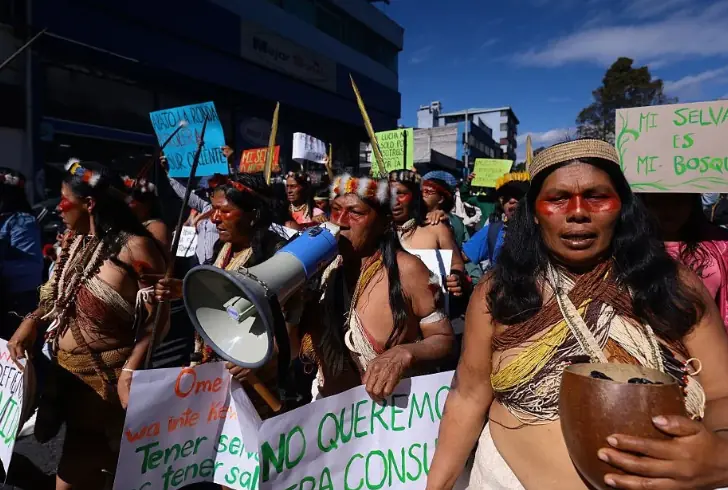
Some Indigenous communities have responded by entering the creator economy themselves.
Members of Ecuador’s Waorani community have worked directly with content creators and tourism operators. The Waorani Experience promotes visits through Instagram and describes its tours as “100% Authentic Tours … As seen on YouTube.”
Boya Tegairis, a Waorani operator, says the work connects to his grandfather’s memory and the defense of the rainforest.
Tourism income can help communities buy medicine and support families. It can also provide money for protecting forest areas.
However, even legitimate tourism can come close to territories where isolated Waorani groups live.
During travel to the Waorani compound, boats may pass through areas associated with isolated Waorani. Those groups have responded violently to outsiders, including contacted Waorani relatives.
Visitors do not stop in those areas. Hosts accompany guests, explain the risks, and require them to sign a waiver.
Even with these safeguards, creators can turn the possibility of danger into part of their content.
That distinction matters because the community’s safety should not become a marketing feature.
The Problem With the “Explorer” Image
The influencer debate is partly about language.
Words such as “lost tribe,” “wild tribe,” “death tribe,” or “time capsule” can make Indigenous communities sound like people from another period of human history.
Yet these communities are living in the present.
Their decision to maintain distance from industrial society does not make them less modern in the sense of existing outside the current world. They make decisions based on their own history, environment, relationships, and experience.
The term “uncontacted” can also create a misleading image. Many isolated communities have experienced violence, disease, forced displacement, missionaries, loggers, miners, or other outsiders in the past.
Their isolation can be a response to those experiences.
That history changes the meaning of a modern creator arriving with a camera.
The issue is not simply whether a visitor feels adventurous. It is whether the community has consented to being visited, filmed, described, or turned into online entertainment.
Can Platforms Control the Trend?
The growth of creator culture makes regulation difficult.
María José Andrade Cerda has suggested stronger screening of people traveling into sensitive Indigenous areas. She has also questioned whether platforms could require proof of “free, prior and informed consent” before publishing footage involving Indigenous communities.
Such rules would be difficult to enforce across international borders. Platforms would also need to determine what counts as valid consent and who has the authority to give it.
International human rights law recognizes Indigenous peoples’ rights to determine whether they want contact. The principle of “free, prior and informed consent” also protects Indigenous decision-making regarding activities on their lands.
National enforcement varies widely.
Peru, for example, can impose six-figure fines for unauthorized entry into protected areas involving isolated Indigenous groups. Yet weak government presence in remote regions can make enforcement difficult.
That gap creates room for creators willing to accept the risk.
Social platforms add another layer because algorithms can reward dramatic material without understanding its ethical context.
A video can be posted within minutes, reach millions of people, and remain online long after a community has objected.
The Cost of Turning People Into Spectacle
The central concern raised by Indigenous advocates is not that every documentary about Indigenous people is harmful.
There is a difference between responsible reporting and treating people as a spectacle.
Some contacted Indigenous communities actively choose tourism or media partnerships because they provide income and visibility. Others may decide that international attention can help protect land or draw support for environmental campaigns.
But consent must remain central.
An isolated community cannot provide meaningful consent to a creator it has never agreed to meet. That makes the pursuit of direct contact fundamentally different from a planned visit to a community that welcomes tourists.
The distinction also applies to storytelling.
A creator can technically have permission to film and still present a community through stereotypes that generate clicks. The audience may see danger, mystery, primitive life, or exotic customs instead of a complex society.
That framing can affect how outsiders think about Indigenous rights.
It can also make exploitation appear acceptable.
Why the Attention Keeps Growing
The economic incentives are straightforward.
Rare footage attracts viewers. Viewers attract advertising revenue, sponsorships, subscribers, donations, book sales, and media opportunities.
The more unusual the subject, the stronger the potential hook.
For Polyakov, the goal was footage of the Sentinelese. For Rosolie, footage of the Mashco Piro became part of a conservation message. For other creators, Indigenous communities form part of broader adventure content.
The motivations differ, but the platform remains the same.
Social media compresses complicated issues into short videos, dramatic thumbnails, titles, and emotional clips.
A community’s history may take years to understand. A creator needs only a few seconds to make the audience curious.
That imbalance makes responsible storytelling difficult.
What Happens Next
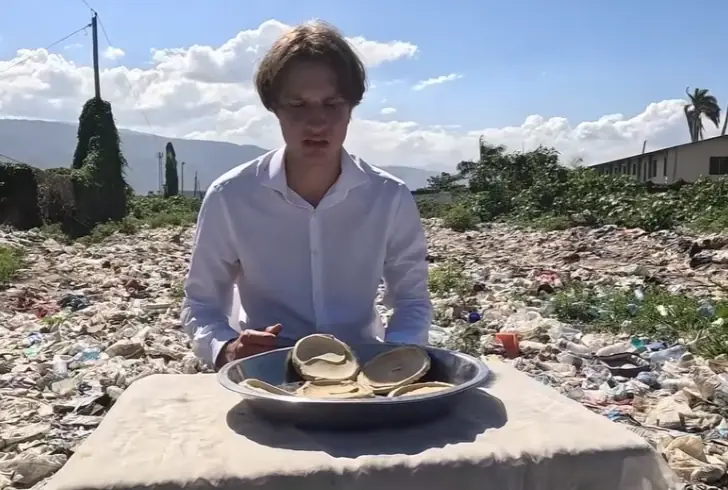
Polyakov’s North Sentinel expedition did not deliver the dramatic encounter he expected. It did, however, create a major public discussion about the limits of online exploration.
Despite the criticism and legal consequences, he has not abandoned filmmaking. He has discussed future projects in Haiti and the Middle East.
He argues that his decision to avoid fabricating footage matters. He says he could have filmed another Indigenous group and falsely claimed it was North Sentinel, but chose to pursue what he considered the real story.
His defense highlights the central conflict.
For creators, authenticity can mean obtaining rare footage that nobody else has. For Indigenous rights advocates, authenticity begins with respecting a community’s refusal to participate.
Those definitions can collide.
The debate will likely continue as more people gain the equipment, money, and audience needed to reach remote regions. A drone, boat, satellite phone, or high-quality camera can make places that once seemed unreachable far easier to approach.
Technology has reduced the physical barriers. It has not removed the ethical ones.
Respecting the Right to Remain Alone
The most isolated Indigenous peoples do not need to become online personalities to have their rights recognized.
Their decision to remain apart from wider society is itself meaningful. For communities that have experienced violence, disease, displacement, or unwanted religious intervention, isolation may represent protection rather than ignorance.
That principle also creates a clear boundary for filmmakers and influencers.
Contact should not become a prize. A remote community should not be treated as a challenge, a content category, or a shortcut to internet fame.
The stories of Indigenous peoples can be documented when communities choose to share them. Conservation work can bring attention to threatened territories. Tourism can support communities that actively welcome visitors. None of those possibilities requires forcing contact on people who have rejected it.
The growing creator economy makes that distinction more important. Social platforms can spread awareness, but they can also turn human lives into entertainment within seconds.
The question is no longer simply who can reach the most remote places. It is whether reaching them should happen at all when the people living there have already made their answer clear.