A bizarre claim that Earth would temporarily lose gravity on August 12, 2026, spread rapidly across social media, prompting fears of a global disaster. The rumor described a seven-second period when people, animals, vehicles, oceans and even the Moon would supposedly be thrown into the air. NASA has now made clear that the scenario is not real.
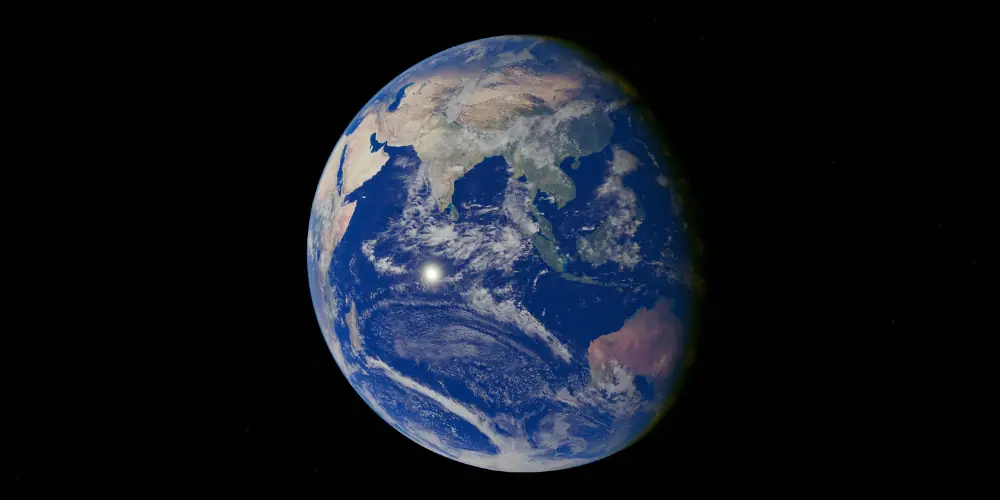
NASA told Snopes that Earth’s gravity is tied to the planet’s mass. The agency explained, “Earth’s gravity, or total gravitational force, is determined by its mass.”
For Earth to lose its gravity, the planet would have to lose a significant amount of mass from its core, mantle, crust, oceans, surface water and atmosphere. NASA added that “The Earth will not lose gravity on Aug. 12, 2026.”
That straightforward explanation directly counters the viral prediction of a temporary gravitational collapse.
How the “Project Anchor” Theory Started
The conspiracy began circulating online in late 2025 and gained attention as August 12 approached. Google searches for “gravity” reportedly increased by 60% compared with the previous week.
At the center of the rumor was an alleged NASA document about “Project Anchor.” According to the posts, the supposed program had an $89 billion budget and was designed to prepare the United States for a catastrophic gravitational event.
The theory claimed that intersecting gravitational waves from black holes would cause Earth’s gravity to disappear for seven seconds at 10:33 a.m. EST on Wednesday.
According to the posts, anything not physically anchored to the ground could rise as high as 65 feet. People, animals, cars, trains, rocks, rivers and oceans were all supposedly at risk. Buildings would allegedly break apart before gravity suddenly returned, sending everything crashing back down.
The claims even predicted tens of millions of deaths and an economic collapse lasting more than a decade.
Social Media Added Fuel
The supposed government response made the rumor sound convincing to some readers, but scrutiny found no evidence of such a program.
Snopes traced the story to a December 2025 Instagram post from an account known for publishing AI-written conspiracy stories. TikTok videos and posts on X then helped spread the claim to a much larger audience.
The rumor gained another boost because August 12 was associated with several genuine astronomical events.
August 12 featured a total solar eclipse, a planetary alignment visible across the dawn sky and the peak of the Perseid meteor shower. Those events are real, but they do not cause Earth’s gravity to disappear.
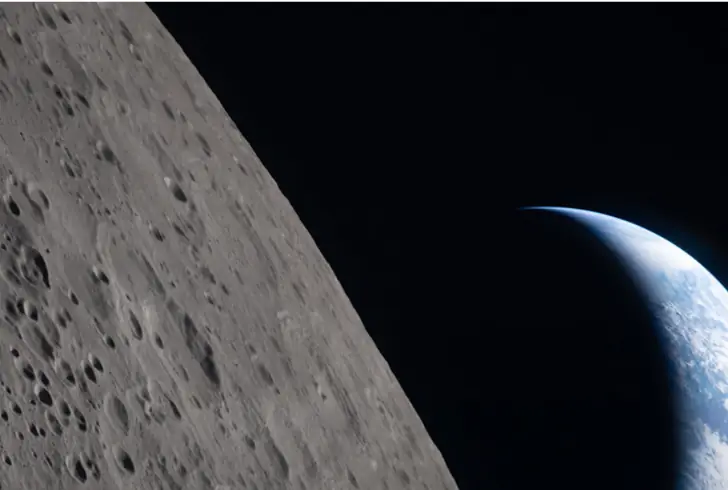
NASA specifically addressed the eclipse, saying, “A total solar eclipse has no unusual impact on Earth’s gravity.”
The Sun and Moon do exert gravitational forces on Earth, particularly through their effects on tides. However, those forces are well understood and can be predicted decades ahead of time.
Why Earth’s Gravity Remains Stable
Earth’s gravitational pull does not simply switch off because of an eclipse, planetary alignment or meteor shower. Gravity depends primarily on mass and distance. Since Earth is not suddenly losing its planetary mass, there is no mechanism for the dramatic event described in the viral posts.
The rumored seven-second gravity blackout therefore has no scientific basis.
NASA’s statement puts the viral August 12 gravity conspiracy to rest. The claims about “Project Anchor,” an $89 billion emergency program and a seven-second gravitational collapse originated online rather than from credible scientific evidence.
The solar eclipse and other celestial events occurring around the same time also had no power to shut down Earth’s gravity. For anyone on the planet, gravity remained exactly where it belongs: firmly in place.