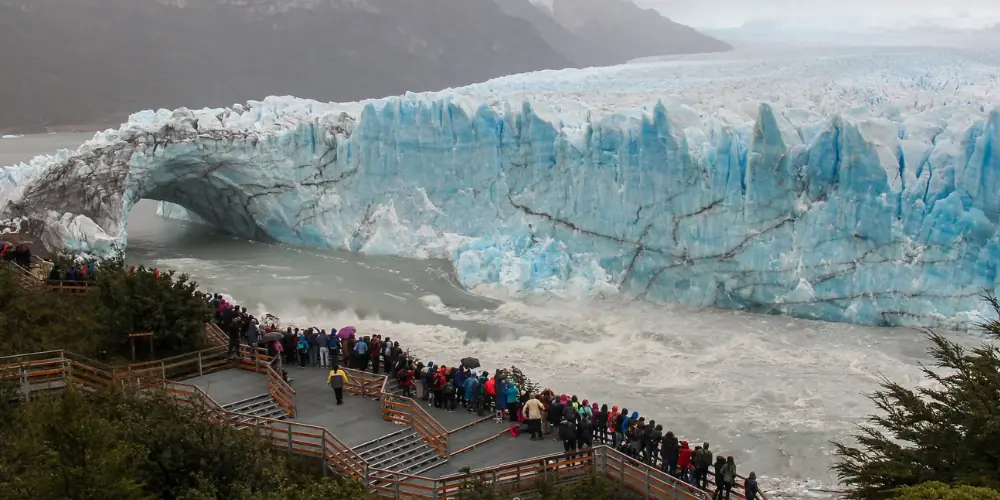
Perito Moreno was once known as one of Patagonia’s few permanent glaciers, but now it is quickly melting. Scientists say this change is not only unexpected but also likely permanent, which is a bad indication for the world’s remaining ice reserves.
Perito Moreno draws nearly 700,000 visitors each year, thanks to its rare accessibility and breathtaking scale. Before reaching the azure waters of Lago Argentino, the glacier passes through a thick beech forest, fed by the Andes’ abundant snowfall. On a specially constructed observation deck, visitors gather to see icebergs calving, in which massive pieces of ice break away and plunge into the lake.
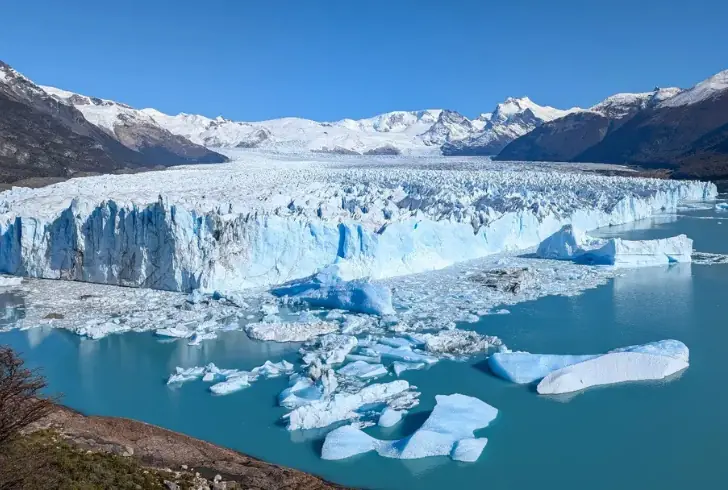
For decades, Perito Moreno defied the regional trend. 90% of Patagonia’s glaciers were gradually receding, yet this enormous glacier remained. Its position allowed it to flow into a narrow channel, at times blocking one arm of Lago Argentino. This natural ice dam cut off water flow until pressure built high enough to burst it — a spectacular event that happened every few years.
That stability is now over. Reduced snowfall and warmer summers have begun to undermine the glacier’s strength.
Scientific Alarms
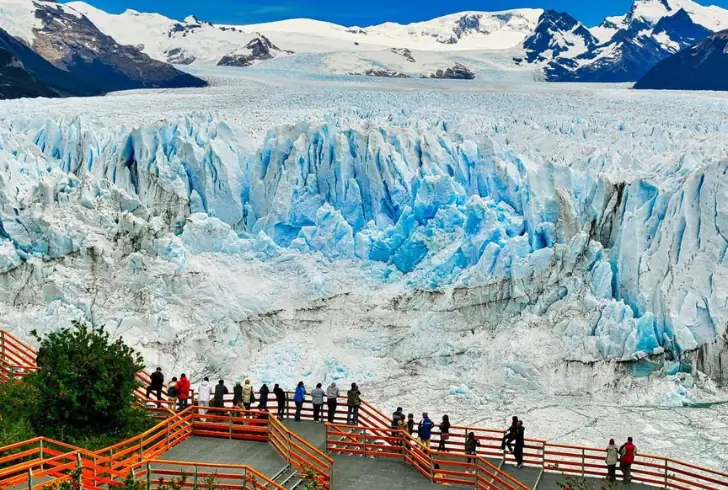
A joint German-Argentinian research team has tracked Perito Moreno’s transformation using satellite imagery, radar scans, and lakebed mapping. Their study, published in Communications Earth & Environment, reveals a sharp drop in the glacier’s surface height, faster retreat rates, and an increase in ice flow speed.
The findings point to a permanent change: Perito Moreno is no longer expected to advance toward the opposite lake shore. Instead, it will keep moving backward into deeper water. In glacial systems, deeper water accelerates calving, and the front of the glacier may soon start floating, increasing instability.
In the short term, visitors might see more dramatic calving events. However, over time, this will mark the gradual disappearance of one of Patagonia’s most iconic natural features. Eventually, the glacier could retreat so far into the mountains that it will vanish from view entirely.
A Global Trend of Glacial Loss
Perito Moreno’s decline mirrors a worldwide crisis. Mountain glaciers have lost more than 6,500 billion tons of ice since 2000, which is around 5% of their overall mass. In other locations, the loss has been marked with symbolic funerals, as seen in Iceland.
The melting of these ice masses adds to rising sea levels. If all mountain glaciers melted, oceans would rise by over a foot. While that scenario is not imminent, coastal communities are already facing the early impacts.
Far from the ocean, glacial retreat can cause dangerous floods. When ice and moraine dams give way, large volumes of water can surge downstream in glacial lake outburst floods. These events threaten millions worldwide.
The consequences extend beyond flooding. Glaciers act as long-term freshwater reservoirs, releasing meltwater steadily throughout the year. Hundreds of millions of people depend on this supply for drinking water, agriculture, and sanitation. As glaciers disappear, that security will vanish as well.
Examples of Sudden Ice-Linked Disasters
Glacial instability can also trigger catastrophic landslides and avalanches. In May 2025, Switzerland’s Birch Glacier collapsed after a section of nearby mountain broke away, sending ice and debris into the valley. The avalanche obliterated the village of Blatten. Only constant monitoring and rapid evacuations prevented a higher death toll.
Such events underscore the need for close observation of glacier dynamics and proactive safety measures in vulnerable areas.
A Disappearing Giant with a Global Message
The loss of Perito Moreno would be more than the end of a tourist destination; it is a visible sign of accelerating climate shifts reshaping landscapes across the globe. Scientists view its retreat as a preview of what many other glaciers may face in the near future.
While the glacier’s collapse may still take years, its trajectory is clear, making visits in the coming years a bittersweet experience — awe-inspiring yet tinged with the knowledge that it will not last.
Perito Moreno’s decline is part of a broader global story of shrinking ice, rising seas, and disrupted water systems, reflecting a rapidly changing climate that threatens the planet’s most vital resources. Addressing this warning requires more than observation; it demands a global commitment to mitigating the forces driving this loss, or else Perito Moreno’s fate will be echoed by countless glaciers worldwide.