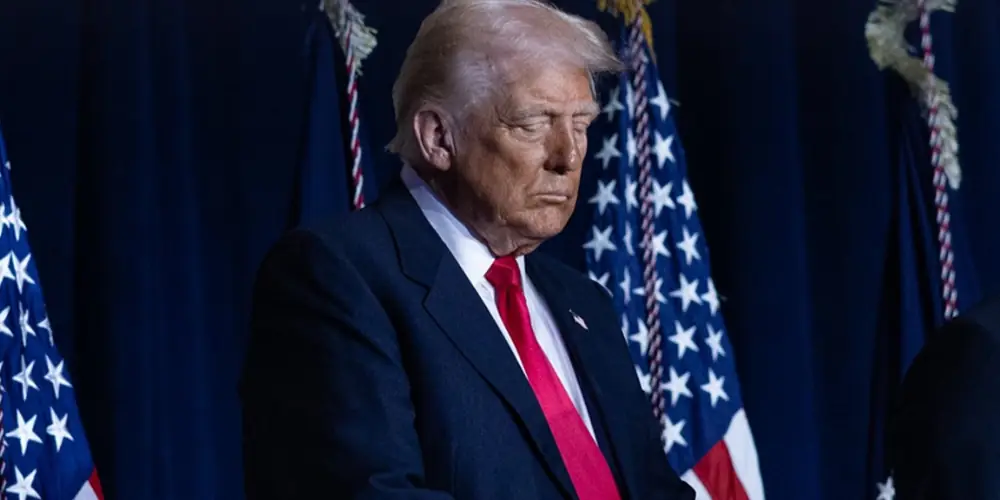
Global politics has reached a turning point, reshaping the landscape of international alliances. Events once thought unimaginable have unfolded, shifting the power balance in ways that may never be reversed. The United States, once the driving force behind the Free World, now appears to be stepping away from that role. As a result, authoritarian regimes are growing stronger while democratic allies question their security.
A Shift in Global Power Dynamics
For decades, the United States upheld its position as the leader of the liberal international order. This system, established after World War II, ensured economic growth, security alliances, and the protection of democratic values. However, recent decisions from Washington suggest that the foundation of this order is beginning to crack.
During a recent security conference, political leaders signaled a major shift in foreign policy priorities. The response to ongoing conflicts, particularly in Ukraine, demonstrated a stark departure from past commitments. Instead of reinforcing alliances, top officials appeared to distance themselves from international obligations. This shift could mark one of the most significant moments in modern history, comparable to the fall of the Berlin Wall or the attacks of 9/11.
The Role of America in the Free World
Since the mid-20th century, the United States has acted as the primary defender of democracy. Despite its reluctance to engage in global leadership, the country took on this responsibility, promoting economic growth, scientific advancements, and stability worldwide. The belief that America had a unique role in preserving global order shaped foreign policy decisions for generations.
American presidents consistently reinforced this commitment. Thomas Jefferson described the nation as “the world’s best hope,” while John F. Kennedy famously stated that America would “pay any price, bear any burden, and oppose any foe to ensure the survival and success of liberty.” Later, Ronald Reagan referred to the United States as “a shining city upon a hill,” a phrase echoed by Barack Obama in the 2016 election.
However, this longstanding ideology appears to be fading. Recent policy shifts indicate a departure from these values, replacing them with a more isolationist approach. This transition has raised concerns among allies who have long depended on American support for security and economic stability.
Realism vs. Idealism in Foreign Policy
Throughout history, U.S. foreign policy balanced idealism and realism. While American leaders often spoke about promoting democracy, they sometimes took actions that contradicted these ideals. During the Cold War, the United States supported authoritarian regimes to counter communist expansion. Even today, alliances with repressive governments in the Middle East highlight the complexity of global strategy.
Despite these contradictions, American leadership still prioritized a world order based on democratic principles. The United States provided military and financial aid to allies, ensuring that authoritarian expansion remained in check. However, the recent withdrawal of support for Ukraine signals a break from this approach.
The Rising Influence of Authoritarian States
As America steps back, other nations are stepping in. Russia, China, and Iran are expanding their influence, creating regional power shifts that favor authoritarian control. These countries are capitalizing on the absence of U.S. leadership, strengthening their geopolitical positions.
Critics of the American-led world order have long pointed out its flaws. However, many fail to acknowledge the alternative—a world where stronger nations dominate weaker ones without consequence. Without U.S. intervention, smaller democracies face the risk of being forced into submission by more powerful states.
The withdrawal of military aid from Ukraine illustrates this reality. By suspending support, the United States sent a clear message: allies can no longer depend on American protection. Although aid was later restored, the damage had already been done. Global leaders now question whether Washington will stand by its commitments in future conflicts.
The Weakening of Democratic Influence
Beyond military strategy, America’s retreat is affecting democracy itself. In the past, organizations like Voice of America and Radio Free Europe spread information to nations under authoritarian control. These efforts played a key role in supporting democracy during the Cold War.
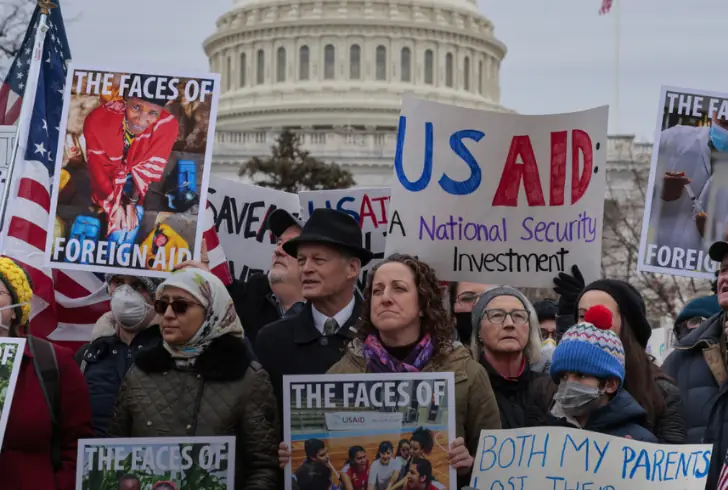
Programs like the United States Agency for International Development (USAID) and the National Endowment for Democracy (NED) provided funding for democratic movements worldwide. These initiatives helped shape the political landscape in Eastern Europe, leading to the fall of authoritarian regimes. However, the current administration has significantly cut funding to these programs, weakening their impact.
Leaders in Moscow, Beijing, and Tehran have welcomed these changes, seeing them as an opportunity to expand their influence. Without U.S. leadership, democratic movements lose vital support, making it easier for authoritarian governments to suppress opposition.
The Future of International Alliances
Many U.S. allies now find themselves at a crossroads. Without guaranteed support from Washington, nations are reconsidering their security strategies. Some countries, including Poland and South Korea, have begun exploring nuclear capabilities to defend themselves. Others are strengthening regional alliances to compensate for the lack of American leadership.
The Five Eyes intelligence alliance, which includes the United States, Canada, Great Britain, Australia, and New Zealand, also faces challenges. Growing uncertainty about American foreign policy has led to discussions about reducing cooperation. A once-unshakable alliance now appears increasingly fragile.
A New World Order Takes Shape
The final weeks of February 2025 marked a turning point in global politics. The United States, once the pillar of international stability, signaled a retreat from its leadership role. As a result, allies are left searching for new security measures while authoritarian states gain ground.
This shift may reshape global relations for decades. Without a unifying democratic force, smaller nations face increased pressure from regional superpowers. The long-held vision of a Free World, led by democratic ideals, is fading. The question now remains: who will fill the void left by America’s withdrawal?