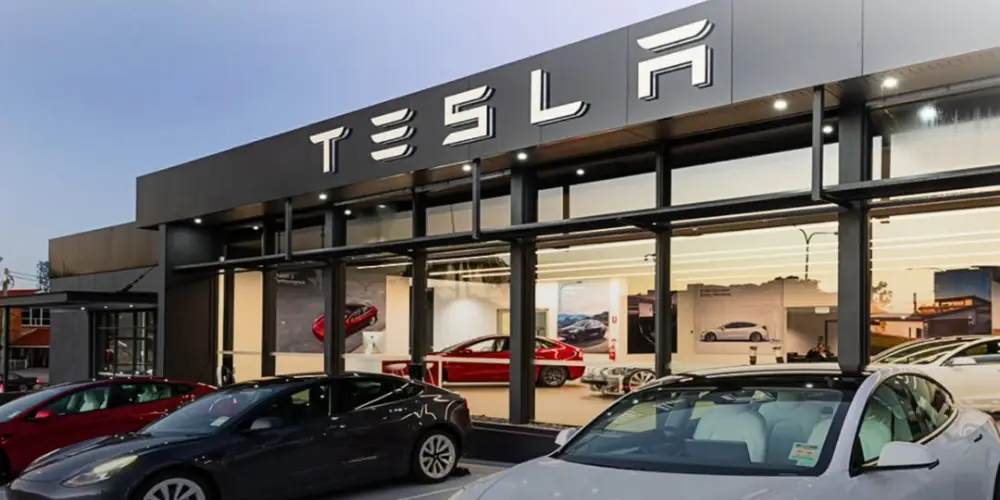
Tesla has long been seen as a revolutionary company, pushing the boundaries of electric vehicles (EVs) and technology. Under Elon Musk’s leadership, it has dominated headlines with promises of self-driving cars, robo-taxis, and even humanoid robots. However, Tesla’s once-unshakable position now faces serious challenges.
With declining market share, intensifying competition, and Musk’s growing political controversies, Tesla may no longer resemble a cutting-edge tech company. Instead, its future could look more like that of a traditional automaker, much like General Motors (GM).
Tesla’s Stock Decline Signals Investor Concerns
Tesla’s stock price has taken a significant hit, dropping nearly 40% from its post-election high. Although the company has experienced similar declines in the past, this time feels different.
In 2022, Tesla’s value dropped by over 50%, while Musk was distracted by his acquisition of Twitter (now X). Despite these fluctuations, long-term investors still saw massive gains, with the stock delivering over 2,000% returns in the past decade.
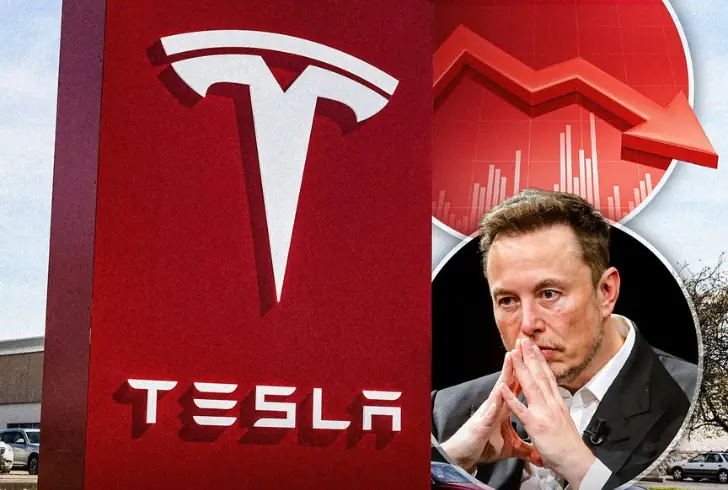
However, recent concerns go beyond short-term market swings. Tesla remains highly valued, with a market capitalization of approximately $970 billion, but its earnings projections have sharply declined. In 2024, revenue growth was stagnant at less than 1%, and analysts have slashed 2025 earnings forecasts by 55%.
Losing Market Share and Sales Decline
Tesla’s grip on the EV market is slipping rapidly. Three years ago, it controlled 78% of the U.S. EV market. By the end of 2024, that number had dropped to 44%, according to Kelley Blue Book.
The situation is even worse in China, where Tesla’s revenue fell by 4% in 2024 despite the overall EV market growing by 40%. European sales have also struggled, with Tesla losing ground in key markets like Germany and France.
Musk’s Controversies Are Hurting the Brand
Musk’s outspoken political views are alienating Tesla’s core customer base. While Tesla shareholders are accustomed to his involvement in various ventures—Twitter, SpaceX, and artificial intelligence projects—his political stances are creating new problems.
Polls show that only 5% of Democratic voters hold a favorable view of Musk, while 74% of Republicans support him. However, 44% of Republicans say they would never consider buying an EV. This political divide has resulted in public backlash, with some Tesla owners placing stickers on their cars stating, “I bought this before Elon went crazy.”
Sales data in Europe highlight this issue, with Tesla’s numbers dropping 45% year-over-year in January, even as the overall EV market expanded.
Increasing Competition and Price Wars
There are now other significant players in the EV market besides Tesla. Competitors like BYD in China and traditional automakers like Ford, GM, and Volkswagen are rapidly catching up.
Fierce competition has led to price reductions across the industry. Tesla’s average revenue per vehicle, after adjusting for leases, has dropped from nearly $56,000 in mid-2022 to under $40,000 in the last quarter of 2024.
If Tesla’s sales continue to decline at the current rate—down 45% in Europe and an estimated 10% in the U.S. and China—total deliveries could shrink by 17% in 2025. This could reduce Tesla’s revenue by more than 20% compared to last year.
Tesla’s Past Strategy Won’t Work This Time
Tesla has faced financial crises before. In 2008, it narrowly avoided bankruptcy with last-minute funding. In 2018, during the chaotic Model 3 production ramp-up, Musk admitted that Tesla came within a month of insolvency.
However, Tesla is in a different position today. The company now holds nearly $37 billion in cash, so bankruptcy isn’t an immediate concern. However, its core business—selling EVs—appears to have peaked, and Musk’s bold promises may no longer be enough to excite investors.
Will Tesla Deliver on Its Promises?
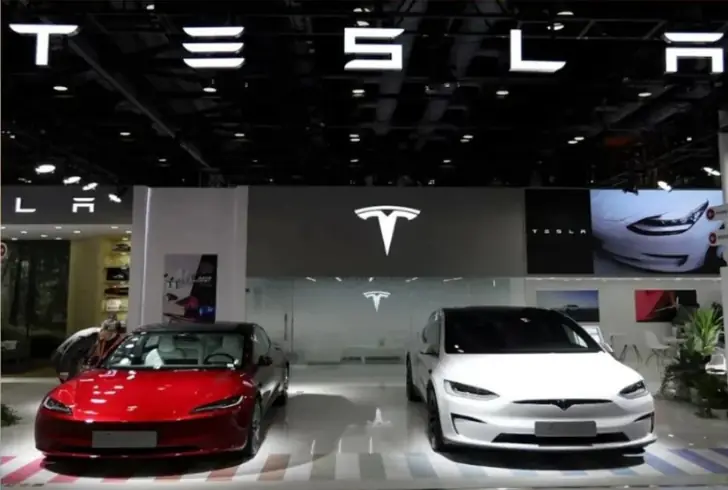
Musk has long relied on futuristic promises to fuel Tesla’s hype. Currently, three major projects dominate Tesla’s roadmap:
1. The $25,000 Affordable EV
For years, Musk has teased the idea of a budget-friendly Tesla. However, the latest updates indicate that this car will be built using existing manufacturing processes rather than a revolutionary new system.
To maintain profitability on a $25,000 vehicle, Tesla would need to cut costs by 37%—a significant challenge. If cost reductions fall short, the impact on profit margins could be severe.
2. Fully Autonomous Vehicles
Musk has promised that Tesla will launch a fully self-driving taxi service in Austin, Texas, by June 2025. However, past promises of self-driving technology have failed to materialize.
While Tesla has collected over 3 billion miles of driving data for its Full Self-Driving (FSD) system, competitors like Waymo already operate driverless taxis. Meanwhile, Chinese rival BYD is rapidly advancing its AI-powered driving systems, gathering millions of miles of training data each day.
3. Optimus – The $10 Trillion Robot Dream
Tesla’s most ambitious bet is Optimus, a humanoid robot that Musk claims could generate over $10 trillion in revenue. While the idea is intriguing, it remains highly speculative.
Tesla’s valuation has always included high expectations for future innovations, but as car sales stagnate, investors may start questioning the feasibility of these grand visions.
A Shift Toward Traditional Automaking
For years, Tesla was considered a high-tech disruptor, always on the verge of something groundbreaking. However, as competition intensifies and Musk’s controversies continue, Tesla is starting to resemble a legacy automaker rather than an unstoppable tech force.
While innovation is still part of its DNA, the company faces increasing pressure to focus on efficiency, pricing strategies, and traditional manufacturing—just like GM and Ford.
If Tesla fails to deliver a game-changing breakthrough soon, its future may be less about revolutionizing the industry and more about surviving as a competitive automaker in an increasingly crowded market.