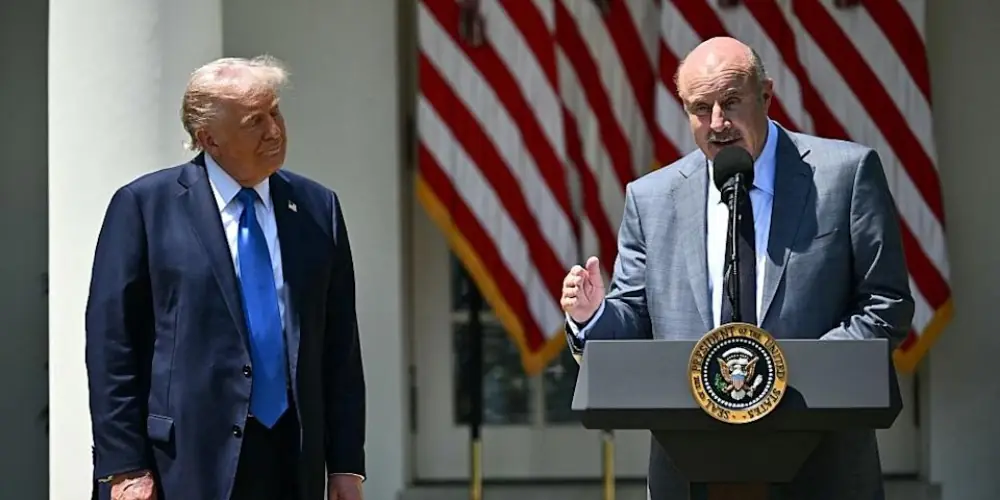
On the National Day of Prayer, a day usually reserved for quiet introspection, something unexpected took center stage. A gathering of religious leaders surrounded Donald Trump at the White House, offering prayers and messages of support. In the middle of this solemn affair, Dr. Phil took the mic and delivered a speech that no one saw coming.
While many tuned in expecting a serious statement, they got a moment that quickly spun into viral territory. With conviction in his tone, Dr. Phil portrayed Trump as a man with tremendous faith and caring. However, it wasn’t just what he said—it was how he said it. His delivery, full of passionate emphasis and dramatic pauses, had audiences wondering if it was sincerity or satire.
Dr. Phil’s Words Stir Mixed Emotions
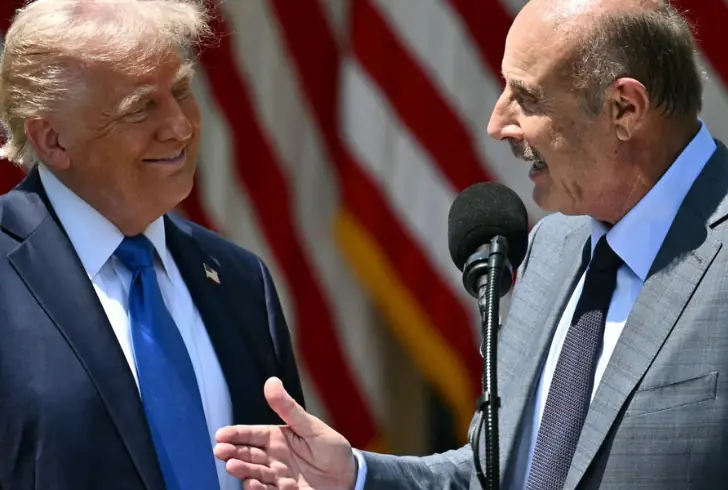
In his address, Dr. Phil offered a personal view of Trump rarely seen in political commentary. He claimed,
“I’ve sat with President Trump with no cameras around, nobody listening, nobody watching. And I’m telling you, this is a man of deep faith, a man of deep conviction.”
He went on to say,
“This is a man who wants this country to have a heart and have religion. God bless America for giving us President Donald Trump.”
It didn’t stop there. Dr. Phil continued, highlighting Trump’s character in private moments:
“When nobody is listening, when nobody is looking, this man cares about every single person in America, independent of race, color, creed, whatever. And it comes from the heart from him.”
By the time he wrapped up with, “I am proud to call him my President, and God bless you, Mr. President,” many online were already reacting—and laughing.
Social Media Lights Up With Reactions
Online platforms exploded with reactions, most of them laced with sarcasm. Users took to Twitter (now X) with quips and disbelief.
1. One user wrote, “Trump is a man of deep conviction in the same way that Dr. Phil is a real doctor.”
2. Another posted, “As someone of deep faith and deep conviction, I call bullshit.”
3. A third added, “People need to ask him his favorite Bible verse and then ask him to explain it.”
These responses weren’t isolated. They spread rapidly, adding a layer of comedy to what was meant to be a devout occasion.
Unexpected Moment Overshadows Serious Event
The National Day of Prayer, which generally emphasizes unity, spirituality, and hope, ended up being overshadowed by one personality-driven moment. Dr. Phil’s remarks brought entertainment value—intentional or not—and highlighted how the line between politics, religion, and media continues to blur.
Whether meant as heartfelt praise or theatrical display, the delivery sparked an avalanche of engagement.
Dr. Phil’s Public Persona Amplifies the Impact
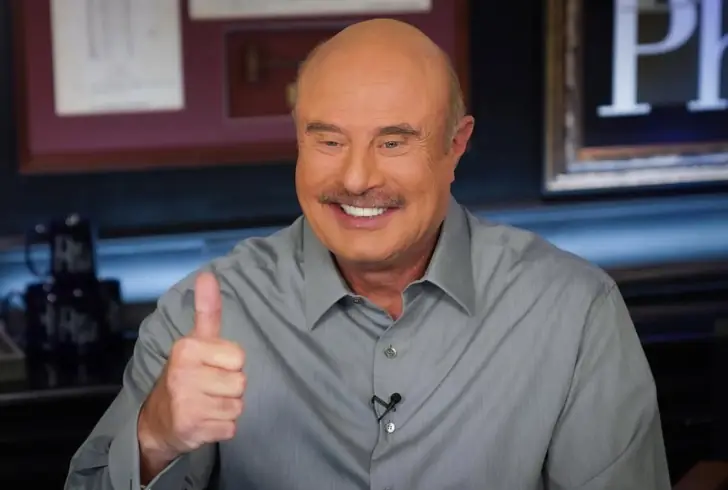
Dr. Phil, known for confronting emotional turmoil and family drama on television, rarely wades into overt political commentary. This made his appearance and words all the more impactful. When a public figure famous for talk show interventions speaks so fervently about a political leader, it tends to get attention.
And that attention wasn’t just from Trump supporters. Critics, comedians, and viewers across the spectrum weighed in. As with most things connected to Trump, reactions landed across a wide scale, from deeply moved to openly mocking.
Not the First Time Trump’s Faith Is Questioned
This isn’t the first time questions about Donald Trump’s religious sincerity have popped up. During previous elections and public speeches, the former President has fumbled religious references. Questions like “What’s your favorite Bible verse?” have famously resulted in evasive or awkward answers.
This pattern has led many to question the legitimacy of spiritual endorsements that come without theological depth or consistency.
When Prayer Events Turn Into Viral Comedy
Dr. Phil’s speech was meant to uplift, perhaps even inspire—but it ended up doing something entirely different. It indicated how no stage is too revered in contemporary America to be overshadowed by celebrity drama.
And while some praised the sentiment behind his message, the loudest reaction came in the form of laughter, memes, and biting commentary online. Transitioning from television therapist to unexpected Trump supporter, Dr. Phil found himself in the middle of a cultural moment that mixed sincerity with satire.
This was less about theology and more about theatrics—fitting for a public figure who built a career on spotlighting emotions and grabbing attention.