
Renée Zellweger carries herself with a mix of warmth and quiet resilience. While sitting in a London hotel bar, her soft Texas drawl fills the air as she recalls her early days filming “Bridget Jones’s Diary.” As she talks, she absentmindedly twists the plastic ring from a bottle of water around her fingers until they turn pink. She laughs lightly at her own nervous habit, proving that even decades later, the emotions tied to that character still linger.
It’s almost impossible to believe that the original film came out twenty-five years ago. Yet Zellweger, now a two-time Oscar winner, still feels a surge of vulnerability when discussing the iconic role that changed her career forever. Though many assume time would dull the memories of those early criticisms, her thoughtful smile suggests otherwise.
From Doubts to a Beloved Icon
When “Bridget Jones’s Diary” first hit theaters, Zellweger faced skepticism from nearly every corner of Hollywood and the British press. Many doubted that a Texas-born actress could convincingly portray one of literature’s most quintessentially British heroines. Even more brutally, some questioned her looks. Hollywood insiders whispered that she wasn’t “voluptuous enough” to be a star, as if talent alone wasn’t enough to carry her forward.
Yet, the film’s impact was undeniable. With “Mad About the Boy” releasing earlier this year and breaking box office records in the UK, the character of Bridget remains as relatable as ever, a single mother navigating work, love, and self-discovery. The movie’s success, surpassing even “Mission: Impossible” at the UK box office, proved once again that audiences crave authenticity over perfection.
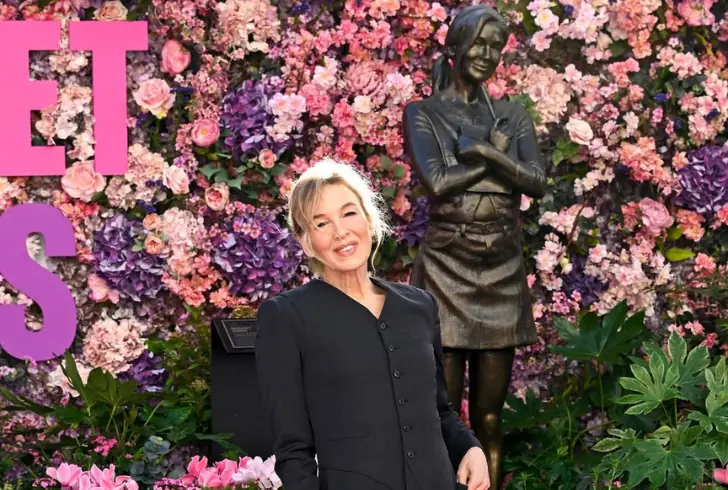
In honor of her legacy, a life-size bronze statue of Zellweger as Bridget now stands in London’s Leicester Square, joining the ranks of Mary Poppins, Harry Potter, and Paddington Bear. It’s a full-circle moment that celebrates not just a film, but a woman who defied the odds.
A Career of Highs, Pauses, and Reflection
After her Oscar-winning performance in “Judy”, where she portrayed the late Judy Garland with breathtaking honesty, Zellweger disappeared from the big screen for nearly six years. Rumors spread wildly, cosmetic surgery, burnout, or creative fatigue, yet the truth was far more grounded.
She had simply chosen peace over chaos. When the world shut down during the pandemic, Zellweger took time to slow her pace. She focused on gardening, writing music, studying international law, and developing the true-crime limited series “The Thing About Pam.” Her quiet retreat wasn’t a disappearance, it was a reset.
Zellweger later admitted that she’d spent nearly two decades caught in a cycle of filming, promoting, and performing without pause. “How can someone tell stories,” she reflected in an interview, “if they haven’t actually lived one outside of a set?” Her creativity ignited during that quiet time, serving as a reminder that genuine experience is the foundation of true talent.
The Weight of Expectations
Long before “Bridget Jones’s Diary,” Zellweger had already made her mark in smaller films like “Love and a .45” and “Empire Records.” But her breakout came when she starred opposite Tom Cruise in “Jerry Maguire.” Overnight, she became America’s sweetheart, though Hollywood didn’t make her journey easy.
Executives often reduced her to her looks, holding “hair meetings” and “dress meetings” where they debated how to make her appear more glamorous. One even said, “She’s not voluptuous enough, so what can we do about that?” For Zellweger, it became clear that the industry measured worth through impossible beauty standards. Yet she pushed forward, building a reputation for playing women who were both flawed and fierce, authentic in every sense.

That’s why “Bridget Jones’s Diary” felt like liberation. Finally, here was a woman on screen whose makeup smudged, who stumbled through romance, and who gained weight without apology. It wasn’t about perfection; it was about truth. Bridget represented every person who ever felt inadequate, and Zellweger portrayed her with sincerity that struck a universal chord.
Relating to Bridget Beyond the Screen
When the first film was released, Zellweger was stunned by how deeply audiences connected with Bridget. Strangers would approach her to say, “I’m Bridget Jones!” People of every age and background related to the character’s humor, insecurities, and heart.
Zellweger understood that connection because she had lived it. Throughout her career, she faced relentless scrutiny, not just as an actress but as a woman constantly evaluated against beauty ideals. The criticism that followed her early fame might have discouraged others, but Zellweger used it as fuel.
She recognized that Bridget’s story wasn’t about weight or clumsiness; it was about acceptance. During the height of “heroin chic” culture in the late ’90s, the film flipped the narrative. Instead of glorifying unattainable beauty, it celebrated imperfection. Bridget’s self-deprecating humor became her strength, turning insecurity into charm.
Breaking Stereotypes and Defying Labels
Hollywood often defines actresses by their appearance or the roles they play, yet Zellweger continues to resist every label placed upon her. She has portrayed everything from romantic leads to complex real-life figures like Judy Garland. In each performance, she channels vulnerability with striking precision.
She once said that the industry’s obsession with perfection nearly suffocated her creativity. Yet playing characters who struggle with identity, like Bridget and Judy, helped her confront her own battles. Each role reminded her that flaws don’t diminish a person’s worth; they make them human.
Her return to the screen in “Bridget Jones’s Baby” after a six-year break in 2016 was another example of resilience. By then, she had faced endless tabloid speculation about her appearance. Instead of denying it, she approached her comeback with humor. Her role in “The Thing About Pam”, where she wore facial prosthetics, became a clever response to the critics who had long obsessed over her looks.
The Enduring Power of Bridget Jones

Even after two decades, “Bridget Jones’s Diary” continues to resonate because it captures real-life imperfections with humor and grace. Zellweger’s portrayal turned Bridget into more than a rom-com character, she became a symbol of self-acceptance.
The film’s message is timeless: it’s okay to be messy, emotional, and unsure. Life rarely unfolds perfectly, and that’s where its beauty lies. Bridget’s charm comes from her honesty, and Zellweger’s fearless performance continues to inspire anyone who’s ever felt “not enough.”
Hollywood might have once told her she wasn’t voluptuous enough for stardom, but her career proves otherwise. Success followed not because she conformed, but because she didn’t.
What Lies Ahead
Renée Zellweger remains open to revisiting Bridget Jones, curious to see how the character’s life evolves in 2035. Her openness reflects an artist who embraces growth, both personally and professionally.
Zellweger’s career proves that authenticity can outshine stereotype. From “Jerry Maguire” to “Judy” and “Bridget Jones’s Diary,” she has shown that vulnerability and imperfection resonate powerfully on screen.
Told she didn’t fit the Hollywood mold, she instead forged her own path. Her work continues to highlight resilience, sincerity, and the strength of staying true to oneself—reminding audiences that real stardom comes from breaking molds, not fitting them.